
News Stories
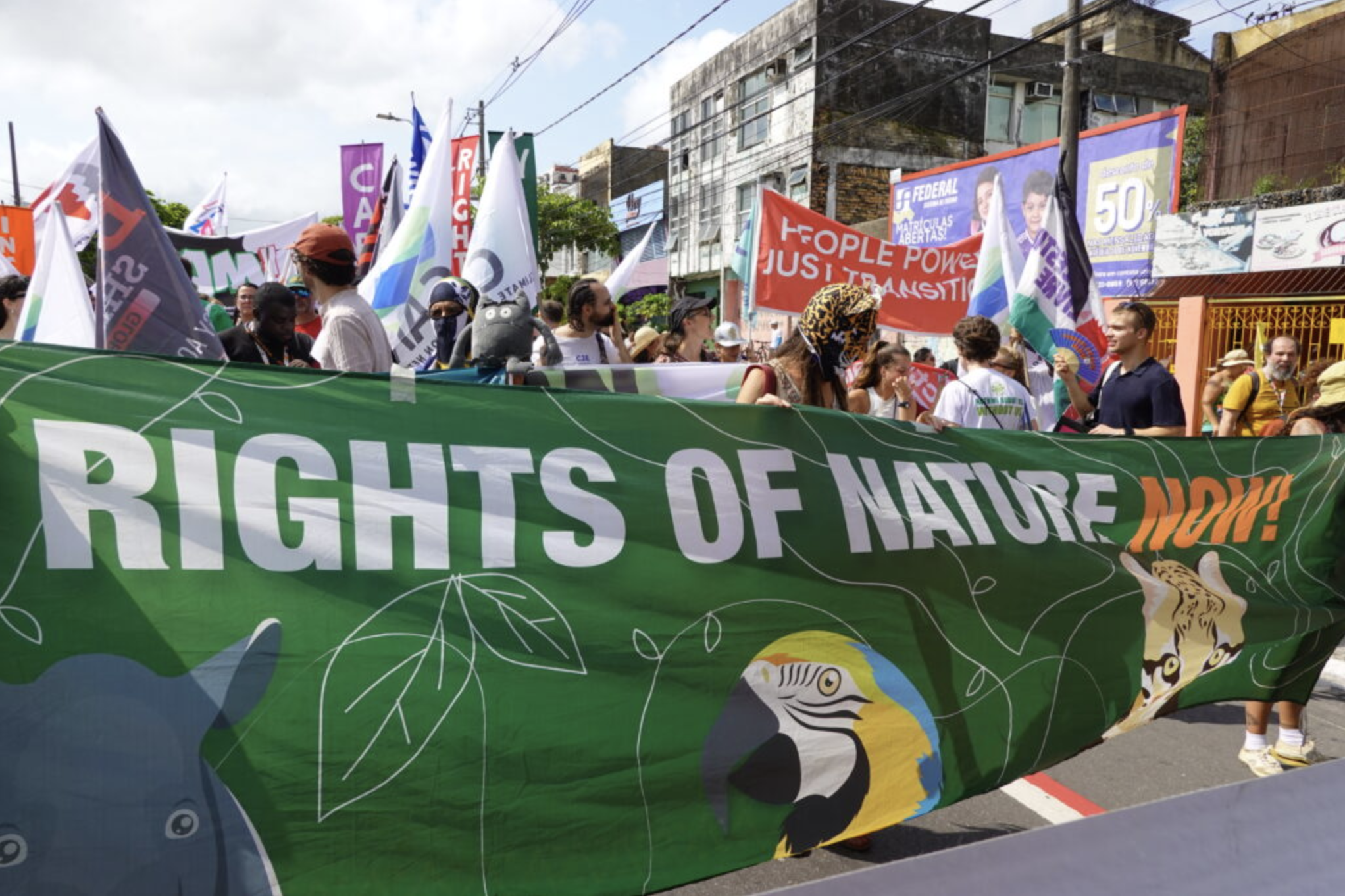
At COP30 in Belém, the Rights of Nature movement extended far beyond formal negotiation rooms, asserting itself across streets, public spaces, and official climate forums. Through coordinated public mobilisation and strategic engagement within the Blue, Green, and Yellow Zones, advocates ensured that the living world was not treated as an abstract concern, but as a rights-bearing presence within climate discussions that have long excluded it.
A diverse delegation of more than 80 Indigenous leaders, Earth Jurisprudence practitioners, and Rights of Nature advocates carried these principles from policy spaces into the heart of the city. During the Climate Action March, their collective presence transformed the streets of Belém into a powerful expression of resistance and renewal, affirming that meaningful climate action must be grounded in respect for the inherent rights of ecosystems and the leadership of Indigenous peoples.
Reportedly over 40 000 people filled the streets of Belém, calls for climate justice and systemic change rang out, highlighting the urgent need to protect the Amazon and the living systems it sustains. These demands went beyond conservation, urging a fundamental shift in legal, economic, and governance systems that continue to treat Nature as property rather than as a living community with the right to exist, thrive, and regenerate.
Together, these actions reinforced a growing global call for transformation, one that places the Rights of Nature at the centre of climate responses and recognises that justice for people and justice for the Earth are inseparable.
Read more about this here.
Tags
