
Ancestral Jurisprudence & Law
Reclaiming Legal Wisdom for a Living Earth
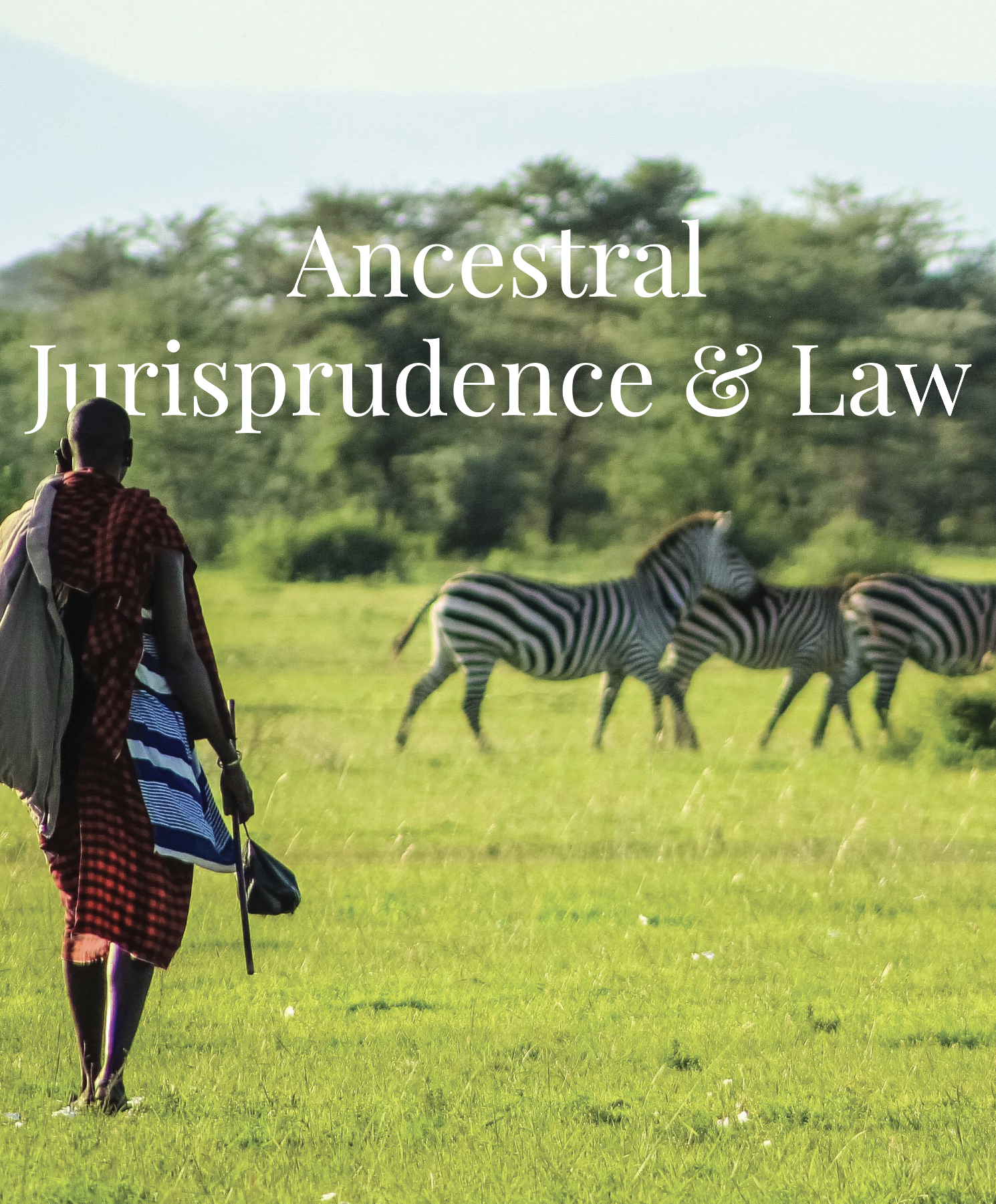
The Wild Law Institute’s initiative on Ancestral Jurisprudence & Law seeks to re-centre legal systems within the deeper ecological and cultural contexts from which they emerge. Essentially it is a recognition that many Indigenous and ancestral legal traditions (particularly across the African continent) have long articulated principles of interdependence, responsibility, and harmonious coexistence within Nature.
This initiative builds on the understanding that contemporary legal systems, largely shaped by colonial and extractive frameworks, are not only insufficient to address the ecological crises of our time but are often complicit in their acceleration. In contrast, ancestral jurisprudence offers a fundamentally different orientation: one in which humans are not separate from Nature, but embedded within it, with corresponding duties to uphold the balance and wellbeing of the whole.
A Living Legal Tradition
Ancestral jurisprudence is not a relic of the past. It is a living, evolving body of knowledge and practice that continues to guide communities in their relationships with land, water, and the wider web of life. These traditions embody ethical frameworks that promote conduct which sustains ecological integrity and supports climate stability as an outcome of healthy, functioning ecosystems.
Through this initiative, the Wild Law Institute as a member of the Global Allinace of the Rights of Nature (GARN) works to surface, articulate, and engage these legal traditions in ways that are meaningful within contemporary legal and policy contexts, without reducing or extracting them from their cultural roots.
Bridging Legal Worlds
A key focus of this work is exploring how ancestral jurisprudence can inform and transform modern legal systems. This includes contributing to emerging fields such as Earth jurisprudence and the rights of Nature, which seek to recognise ecosystems and non-human beings as rights-bearing members of the Earth community.
In line with this on 30 March 2026, the Wild Law Institute, together with 20 African organisations from across the continent, submitted a landmark amicus brief to the African Court on Human and Peoples' Rights.
The brief argues that the climate crisis cannot be addressed without recognising the intrinsic value of Nature, the fact that humans are part of Nature, the interdependence of all life, and the obligations of States to protect both human and more-than-human beings, in present and future generations.
Cover letter for Amicus Brief Submitted to African Court
Amicus Brief Re African Ancestral Jurisprudence and Law, Earth Jurisprudence & Rights of Nature
Toward Systemic Transformation
The long-term vision is the emergence of legal systems that:
– recognise the intrinsic value of the natural world
– affirm the interdependence of all beings
– uphold responsibilities to both human and more-than-human communities
– enable conditions for genuine harmonious coexistence within Nature
In doing so, Ancestral Jurisprudence & Law contributes to a broader shift toward legal and governance systems that are capable of responding meaningfully to the climate and ecological crisis, grounded not only in science, but in the enduring wisdom of ancestral traditions.